
Joanne Mortimer, M.D., of City of Hope breaks down new data linking GLP-1 receptor agonist use to a reduction in mortality across multiple tumor types.
Joanne Mortimer, M.D., of City of Hope breaks down new data linking GLP-1 receptor agonist use to a reduction in mortality across multiple tumor types.

RASolute 302 shows daraxonrasib boosts survival in pancreatic cancer, with expanded access and trials pushing earlier use and combination strategies.
Daraxonrasib, a first-in-class multi-RAS inhibitor, doubles survival in metastatic pancreatic cancer and hints at broader, mutation-agnostic impact.

Tanya Dorff, M.D., breaks down early ABBV-969 data showing strong responses in heavily pretreated mCRPC at ASCO 2026.

A study participant in teh trial of daraxonrasib felt like he was part of something special, says UT MD Anderson's Subam Pant, "and he is."
The second-line drug for metastatic pancreatic cancer is pan-RAS inhibitor that recruits cyclophilin A to stick to RAS proteins, explains Subham Pant, M.D., M.B.B.S., of The University of Texas MD Anderson Cancer Center.

Javier Cortes, M.D., Ph.D., discusses KEYNOTE-522 findings showing pembrolizumab plus chemotherapy delivers durable survival gains in high-risk early-stage TNBC after nearly 8 years of follow-up.

In an interview before the annual ASCO meeting, Eduardo Vilar-Sanchez, M.D., Ph.D., of the University of Texas MD Anderson Cancer Center, talks about NOUS-209, an immunotherapy being studied to prevent cancer in those with Lynch syndrome mutations.
Eduardo Vilar-Sanchez, M.D., Ph.D., of the University of Texas MD Anderson Cancer Center, was awarded for his work in cancer immunoprevention and his efforts to develop a cancer vaccine for those who are carriers of Lynch mutations.

The pan-RAS inhibitor met primary end points of overall survival and progression-free survival as a second-line therapy for patients with metastatic pancreatic cancer.
Treatment after treatment for second-line treatment for pancreatic cancer has failed in clinical trials. Daraxonrasib seems to have broken the losing streak, says MD Anderson's Shubman Pant, M.D., M.B.B.S.

Ivonescimab is a first-in-class PD-1/VEGF bispecific antibody that achieved 28-month median survival in advanced squamous non-small cell lung cancer.

A phase 3 clinical trial presented at ASCO 2026 found that combining talazoparib with enzalutamide reduced the risk of cancer progression by 52% compared with enzalutamide alone in prostate cancer patients with specific DNA repair gene mutations, with even greater benefit seen in those carrying BRCA mutations.

Lead ARACOG trial investigator Alicia Morgans, M.D., discusses the importance of including cognitive effects in the conversation around prostate cancer treatment.
A new investigational combination therapy for advanced KRAS G12C-mutant non-small cell lung cancer showed "highly promising" results with “manageable” side effects, according to the study’s lead author.
Ferdinandos Skoulidis, M.D., Ph.D., explains what’s next for this treatment for patients with previously untreated advanced or metastatic KRAS G12C-mutated non-small cell lung cancer.
Divarasib plus pembrolizumab shows strong responses in patients with advanced KRAS G12C+ non-small cell lung cancer, according to the results of the Krascendo 170 study, presented today at ASCO 2026.

Dana-Farber’s Katherine Janeway, M.D., discusses how reimbursement policies for molecular diagnostics have failed to keep pace with scientific evidence, leaving gaps in the care for pediatric bone cancer patients.

A collagen implant that releases radiation after brain tumor surgery reduced cancer recurrence and increased overall survival, according to results presented at ASCO’s annual meeting.
Dana-Farber’s Katherine Janeway, M.D., discusses how molecular biomarkers inform treatment decisions in children and adolescents with the bone cancers Ewing sarcoma and osteosarcoma.

Seven-year CROWN trial data show lorlatinib's median PFS still not reached in advanced ALK-positive NSCLC, with a 94% reduction in intracranial progression risk.

Nubeqa (darolutamide) may have fewer negative cognitive side effects because it doesn't cross the blood-brain barrier.

Women with high-grade serous ovarian cancer who fasted around chemotherapy sessions had lower insulin levels, improved chemotherapy responses and potentially longer progression-free survival compared with patients who ate normally, according to findings from an Italian study presented at the 2026 American Society of Clinical Oncology Annual Meeting.

GLP-1 receptor agonist drugs may reduce cancer progression in lung, breast, colorectal, and liver cancers by 38% to 50%, and high GLP-1 receptor expression correlates with 33% lower mortality risk.
A presentation at the 2021 American Society of Clinical Oncology meeting earlier this month reviewed recent findings from trials investigating the treatment of urothelial cancer.

During the American Society of Clinical Oncology 2020 Annual Meeting, Flatiron Health, Foundation Medicine, and Genentech presented plans for the Prospective Clinico-Genomic study (PCG), a low-interventional pilot that will use a technology-enabled prospective data collection platform to simplify data collection for patients with lung cancer being treated through clinical trials. The idea is collect blood samples using Foundation Medicine’s liquid biopsy assay and analyze the results through Flatiron’s platform, to see if genomic changes can be detected over the course of cancer treatment. Bobby Green, MD, chief medical officer for Flatiron Health, spoke with Managed Healthcare Executive®.
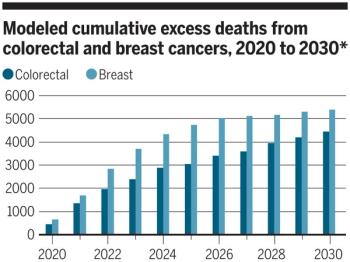
The "conservative estimate" assumes that disruption of services ends in six months.