

Conference Coverage
Trending on Managed Healthcare Executive
1
Heart data in sleep study predicts atrial fibrillation, heart failure years in advance
2
5 things you should know about intismeran, the Moderna-Merck cancer vaccine
3
Ty Gluckman, M.D., on what the new lipid guidelines mean for payers | HSES 2026
4
Christine Johnston on biosimilar interchangeability and PBM formularies
5
Undertesting, not access, is the biggest gap in lipid care
Latest Content





Advertisement
Shorts

0:31
Earlier psychosis intervention may lower costs and improve schizophrenia care
11 hours ago
by
Logan Lutton
0:54
Why measuring first episode psychosis is more complicated than it seems
12 hours ago
by
Logan Lutton
2:42
My Two Cents: Christine Johnston on changing the PBM RFP test
19 hours ago
by
Lauren Gordon
0:44
Alison Pritchard, Ph.D., says the future of ADHD treatment depends on personalized treatments
5 days ago
by
Logan Lutton

1:08
Why separate approval committees for each CAR-T patient slow access to care
5 days ago
by
Briana Contreras
1:00
What it takes to scale outpatient CAR-T delivery
5 days ago
by
Briana Contreras

0:46
Real-time glucose data helps patients with type 2 diabetes lower A1C
8 days ago
by
Logan Lutton

1:01
Why eye care should be an integral part of the burn recovery process | AAO 2026
12 days ago
by
Logan Lutton

0:42
At home VR glaucoma testing could be the future of prevention | AAO 2026
13 days ago
by
Logan Lutton
0:35
Overlooked ocular aspects of healing from a severe burn | AAO 2026
14 days ago
by
Logan Lutton
Formulary Watch






What Will the Midterms Mean for Healthcare?
Policy experts unpack the results live.

Take 10 Minutes for MHE’s State of the Industry survey
Your view shapes our December industry report.

Dive into our October Issue!
Experts dig in to how AI is affecting healthcare

Your Weekly Briefing on What’s Shaping Managed Care
MHE's e-newsletter curates news, insights and strategy for payer decision-makers.
MHE's PBM Directory
Find the right PBM for your plan





























Advertisement
All News
Advertisement
Will Carroll, Pharm.D., of Sutter Health says pharmacy is often handed strategy to execute instead of shaping it, and must show value in C-suite terms.
Ty Gluckman, M.D., says undertesting and undertreatment are the biggest gaps in lipid care and calls on leaders to invest in cardiovascular prevention.
Ty Gluckman, M.D., says the 2026 dyslipidemia guideline brings back risk-based LDL goals, and clinical inertia, not access, is now the biggest barrier.

Stanford Health Care’s Janjri Desai, Pharm.D., says pharmacists improve outcomes but often can’t bill for it, making billing parity key to growing services.
Stanford Health Care’s Janjri Desai, Pharm.D., says pharmacy should be treated as a clinical service line, not just a 340B financial workhorse.
Robotic lobectomies grew from 49% to 70% of cases from 2020 to 2024 as access and training expanded, says Staci Beamer, M.D., of HonorHealth.

AI analyzes single-lead ECGs from sleep studies to predict atrial fibrillation, heart failure, and mortality risk, enabling scalable cardiovascular disease screening.
Consistent bedtime routines, screen-free bedrooms and therapist support for night waking help children with ADHD sleep better, said Alison Pritchard, Ph.D.

Jamilia Sherls, DNP, MPH, RN, CPN, CDP, of Washington’s health department says health systems should look to AAP and AAFP schedules and build on patients’ trust in providers.
Jamilia Sherls, DNP, MPH, RN, CPN, CDP, of Washington’s health department says a stayed schedule overhaul cutting recommended child vaccines from 17 to 11 could upend coverage.
Advertisement

The American College of Chest Physicians and the European Respiratory Society issued bronchiectasis guidelines recently. Here is a comparison.

Experts discussed guidelines from the American College of Chest Physicians and the European Respiratory Society at the 2026 CHEST meeting in Phoenix earlier this week.
Melody Chang, R.Ph., says payers cover bispecific and CAR-T drugs but not the monitoring that lets community practices deliver them safely at lower cost.
Continuous glucose monitoring cut mean A1C from 8.8% to 7.2% over 26 weeks in adults with type 2 diabetes not on insulin, 0.9 points more than routine care in the CONNECT trial.
American Oncology Network’s Melody Chang, R.Ph., says 18% of its first 70 outpatient bispecific patients had CRS, all low grade with no hospitalizations.

A screening program in eight countries found early-stage type 1 diabetes in about 1 in 350 children with no family history of the disease.

Healthcare leaders should be preparing now for important changes in prior authorization and other areas of healthcare.

UC Davis Health’s Tiffany Phung, Pharm.D., and Tim Cutler, Pharm.D., say staff-driven ideas protect research independence in industry partnerships.
UC Davis Health’s Tiffany Phung, Pharm.D., and Tim Cutler, Pharm.D., say research justifies services and opens doors to limited distribution drugs.

Garza, an expert on hidradenitis suppurativa at Johns Hopkins, says increasing incidence of the disease on the Japanese island of Okinawa offer some "tantalizing clues" about reasons for the rising incidence.

Apothecary Pharma is recalling 22 vials of compounded tirzepatide and one NAD+ vial nationwide, citing a lack of assurance of sterility.

Pooja Roy, M.D., of Houston Methodist Hospital, discusses how Precedex (dexmedetomidine), an ICU sedative, sometimes triggers noninfectious fever, sparking costly sepsis workups, and the need for a test could help clinicians identify the drug as a cause of fever in ICUs.

Pope Leo early-stage adenocarcinoma is a reminder that lung nodules often cause no symptoms and that people who never smoked can get lung cancer.
Young-onset lung cancer often strikes nonsmokers, and current screening based on smoking is not likely to find it, says Singhi, an assistant professor at UT MD Anderson Cancer Center in Houston. New risk-based screening, liquid biopsies, and breath tests aim earlier detection.

Rex Hoffman, M.D., MBA, says physician shortages and burnout are the most underestimated pressures on health system.
Rex Hoffman, M.D., MBA, of Providence Holy Cross walks through a CMO’s day in a hospital that often runs 85% to 100% full, from safety huddles to discharges.
On average, caregivers want to see their children with ADHD fall asleep 30 minutes faster, but the best sleep treatments average approximately 20 minutes, a new survey study found.

Preventing hospital readmissions among patients with COPD. Here are some ideas on how to do that | CHEST 2026
Published: | Updated:
Research findings presented at CHEST meeting show COPD hospital readmission drops with discharge checklists and navigation. Other research suggests targeting readmission prevention efforts on patents discharged to post-acute facilities.

As the pharmacist pipeline tightens, leaders from UC Davis Health, UCSF Health, and Sutter Health say financial sustainability now depends as much on capacity as on cost.

GLP-1 use in adults 65 and older with MASLD was linked to a 45% lower risk of death, and a 28% lower risk of hepatic decompensation, a new Houston Methodist Research Institute study shows.

New data from Sutter Health suggest the real gap in GLP-1 access is physician awareness, not insurance coverage — and fixing it closed outcome disparities across every racial and ethnic group.

Research findings presented at the CHEST meeting show that false positives may make patients more adherent to screening. Qualitative research shows that patients want more explanation and results communicated verbally.
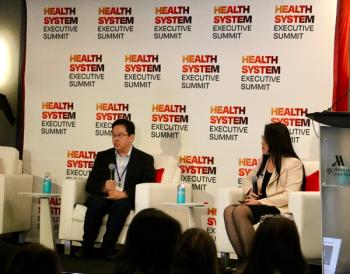
David Chen, PharmD, explains how physician-led formulary decisions — not rebates — power Kaiser Permanente’s biosimilar strategy, and why he thinks other health systems could do the same.
Advertisement
Advertisement